
Citizen Reporting for Cleaner, Safer and Better-Managed Communities
What If Every Citizen Could Help Improve Their Community?
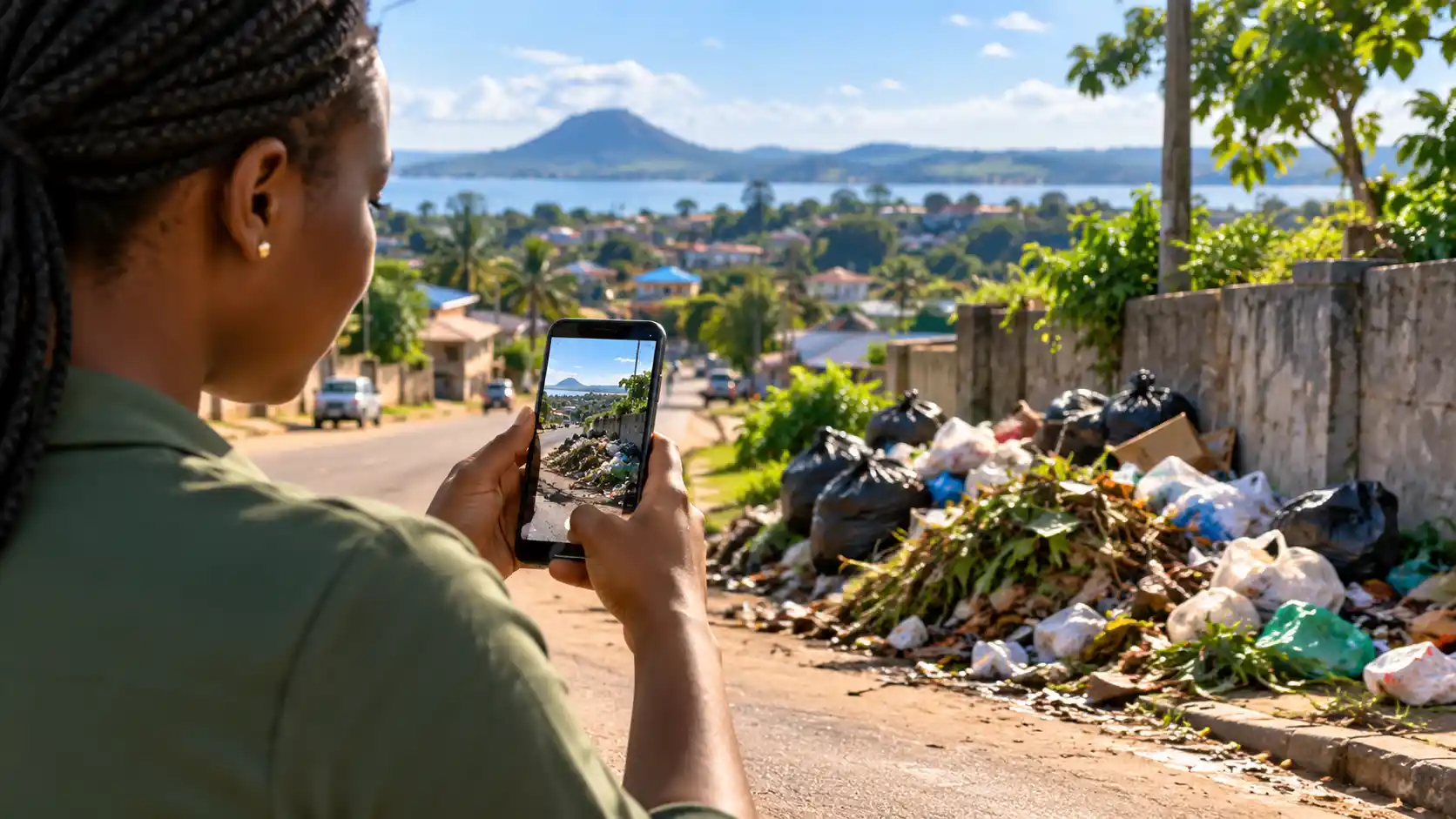
A clean, safe and well-managed community does not depend only on government authorities. It also depends on citizens who can identify problems, report them at the right time, and help decision-makers understand what is happening on the ground. Yet in many communities, everyday problems remain unresolved simply because they are difficult to report, difficult to locate, or difficult to track. A pile of uncollected waste may remain on a street for days. A damaged road may become a serious hazard. A broken streetlight may leave an area unsafe at night. A blocked drainage channel may cause flooding during heavy rain. The problem is not always that nobody cares. Sometimes, the right information simply does not reach the right people at the right time. This is where location-based citizen reporting can make a difference.
From “There Is a Problem” to “There Is a Problem Here”
Traditional reporting often depends on descriptions such as:
“There is a lot of garbage near the market.”
- But where exactly?
- Which market?
- Which road?
- Which neighborhood?
- How serious is the problem?
- When was it reported?
- Has it already been addressed?
Without accurate location information, even a genuine report can be difficult to act upon. With location-based reporting, a citizen can report an issue and attach its geographical location. Instead of simply saying “there is a problem,” the report can communicate:
“There is a problem here.”
That small difference can significantly improve how communities identify, understand and respond to local challenges.
How HEYIKO Can Support Citizen Reporting
HEYIKO is built around a simple idea:
HEYIKO: Wapi huko?
Location matters.
Through the My Town experience, HEYIKO can provide a digital space where citizens can discover, report and follow location-based issues within their communities.
A citizen could, for example, identify:
- Uncollected waste
- Damaged roads
- Blocked drainage systems
- Broken streetlights
- Flood-prone areas
- Unsafe public spaces
- Water-related problems
- Environmental concerns
- Damaged public infrastructure
- Other community issues
The citizen can submit the report together with relevant information and its location. Instead of scattered complaints across different channels, problems can become organized, visible and location-aware information.
Turning Community Problems into Map-Based Information
One of the most powerful aspects of location-based reporting is the ability to visualize problems on a map.
- Imagine opening HEYIKO and seeing your town from a different perspective.
- You might see one area with several waste-related reports.
- Another area might show drainage problems.
- Another might show road damage.
- Another might show public infrastructure requiring attention.
This creates a living map of community needs. For citizens, it helps them understand what is happening around them. For organizations and local authorities, properly managed location data can help identify patterns, prioritize interventions and understand where problems are concentrated.
From Reporting to Action
Reporting a problem should not be the end of the process. The real value comes when a report can contribute to action. A location-based reporting system can support a simple cycle:
Identify → Report → Locate → Review → Respond → Update
- A citizen identifies a problem.
- The issue is reported.
- Its location provides geographical context.
- The responsible team or authority can review the information.
- Action can then be taken where appropriate.
- Finally, the status of the issue can be updated.
This creates greater visibility around community problems and helps citizens understand whether reported issues are still pending, being addressed or have been resolved.
Building Cleaner Communities
Waste management is one example where citizen reporting can have a direct impact. Consider a neighborhood where garbage has not been collected for several days. Instead of relying only on word of mouth, a resident can report the location. Other residents may also see the reported issue. Over time, repeated reports can reveal areas where waste collection may require greater attention. The result is not simply a collection of complaints. It becomes location-based information that can support better decision-making.
Building Safer Communities
The same principle can apply to safety-related environmental conditions. A broken streetlight, damaged pedestrian path, dangerous road section or other hazardous public condition may create risks for residents. When these problems can be reported with their locations, communities gain a clearer picture of where attention may be needed. Location does not replace professional assessment or emergency services. Instead, it can provide another channel through which communities can make relevant issues more visible.
Better Information for Better Decisions
Good decisions require good information. For community management, knowing what is happening is important. Knowing where it is happening can be even more important. Location adds a geographical dimension to community information. This can help transform thousands of individual observations into patterns that can be analyzed.
For example:
- Where are most complaints occurring?
- Which areas have repeated infrastructure problems?
- Which neighborhoods experience recurring flooding?
- Where are waste-management issues concentrated?
- Which problems remain unresolved for the longest period?
These questions become easier to explore when information is connected to location.
Citizens as Partners in Community Development
Citizen reporting should not be viewed simply as a way for people to complain. It can become a form of community participation. Residents know their neighborhoods.
- They walk the roads.
- They use public facilities.
- They see problems as they happen.
- They often notice changes before they appear in official datasets.
By providing appropriate tools for reporting and sharing location-based information, technology can help connect this local knowledge with organizations responsible for planning and service delivery. The goal is not to replace government. The goal is to help create a stronger connection between citizens, communities and decision-makers.
Privacy and Responsible Location Sharing
Location technology also comes with responsibility. Not every report should be publicly visible. Some issues may contain sensitive information, while some locations may need restricted access. A responsible citizen-reporting platform therefore needs to consider:
- User privacy
- Location privacy
- Appropriate visibility settings
- Data security
- Responsible content moderation
- Role-based access
- Protection of sensitive information
HEYIKO’s approach to location-based services should therefore focus not only on making information visible, but also on ensuring that information is shared responsibly and appropriately.
Creating Smarter Communities
A smart community is not simply a community with more technology. It is a community where technology helps people solve real problems. When citizens can report problems more effectively, when information can be connected to location, and when decision-makers can better understand what is happening on the ground, communities can become more responsive. That is the opportunity behind citizen reporting. It is about moving from:
“Someone should do something.”
to:
“Here is the problem. Here is where it is. Here is the information needed to understand it.”
The Future of Community Reporting
As cities and towns continue to grow, managing communities will require better information, stronger citizen participation and smarter use of technology. Location intelligence can become an important part of that future. HEYIKO is exploring how mapping, location technology and community participation can come together through My Town to create a more connected relationship between people and the places where they live. Because every community has problems. Every community has people who see those problems. And every community has an opportunity to become better when those observations can be transformed into useful information.
HEYIKO: Wapi huko?